GLP-1 Medications and Oral Health: The Good and the Bad

Written by Dr. Adrienne Hedrick
Medications such as Ozempic and Wegovy have become increasingly common for managing diabetes and for weight loss. As more people take these medications, there has also been more discussion about how they may affect teeth and gums. You may have heard terms such as “Ozempic mouth,” “Ozempic teeth,” or “Ozempic tongue.”
Much of that discussion focuses on the negative. But the relationship between GLP-1 medications and oral health is more balanced.
The most important thing to understand is that there is not strong human evidence showing that GLP-1 medications directly damage teeth or directly improve periodontal disease. Most oral-health effects appear to be indirect, resulting from things such as dry mouth, acid reflux, vomiting, changes in nutrition, weight loss, and changes in inflammation throughout the body. Research into possible direct effects on oral tissues is still developing.¹
Fortunately, many of the negative effects can be reduced or managed once they are recognized.
What Are GLP-1 Medications?
GLP-1 medications help regulate blood sugar, appetite, and digestion. They can reduce appetite, help people feel full longer, and slow how quickly food leaves the stomach. Common examples include Ozempic and Wegovy, which contain semaglutide.
Mounjaro and Zepbound contain tirzepatide, which works on both GLP-1 and GIP receptors but is often grouped with GLP-1 medications. These drugs can provide significant health benefits, but some of their effects on the body can also indirectly affect oral health.
How Can GLP-1 Medications Affect Oral Health?
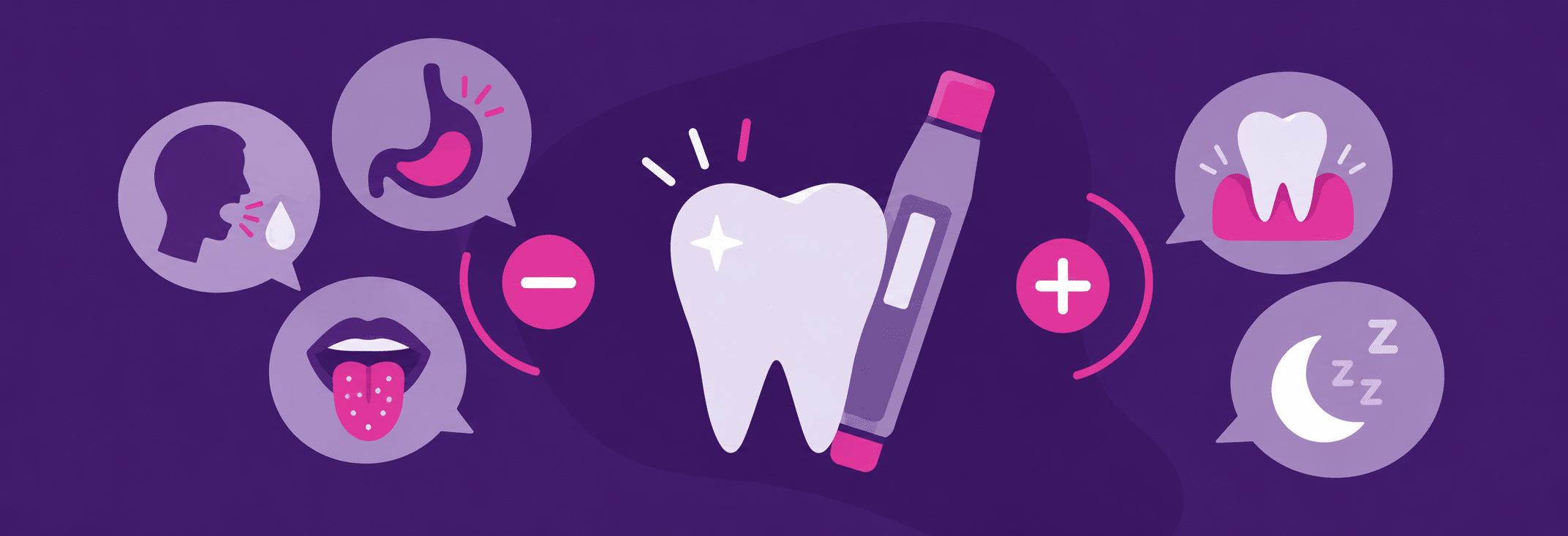
Most oral-health effects linked to GLP-1 medications appear to be indirect. For example, dry mouth can increase cavity risk, reflux or vomiting can expose teeth to stomach acid, and eating less may make it harder to get enough nutrients.
At the same time, GLP-1 medications and the weight loss that often accompanies them can improve metabolic health and reduce inflammation, which may benefit conditions such as periodontal disease. Research into these effects is still developing.¹
In other words, GLP-1 medications can indirectly affect oral health through their effects on the body, both positive and negative.
What Are “Ozempic Mouth” and “Ozempic Tongue”?
“Ozempic mouth” and “Ozempic teeth” are not medical diagnoses. They are informal terms used to describe oral changes experienced by some people taking Ozempic or other GLP-1 medications.
Someone talking about “Ozempic mouth” may be referring to dry mouth, bad breath, tooth sensitivity, enamel erosion, or another change. Often there is an identifiable reason behind the symptom, such as reduced saliva or repeated exposure to stomach acid.
“Ozempic tongue” generally refers to dysgeusia, or a change in taste. Some people describe a metallic or otherwise unusual taste.
This appears to be relatively uncommon. In one small study of 32 patients taking oral semaglutide, approximately 6% reported a persistent metallic taste in the tongue and mouth.² That does not mean 6% of everyone taking a GLP-1 will experience “Ozempic tongue,” but it does show that changes in taste can occur.
An altered sense of taste may be unpleasant, but it does not necessarily mean the medication is harming your teeth or gums.
Negative GLP-1 Effects on Oral Health
Rather than making a long list of every dental condition ever reported by someone taking a GLP-1, it is more useful to focus on the main ways these medications can indirectly affect oral health.
Dry Mouth
Saliva helps wash away food debris, neutralize acids, control the pH of your mouth, and provide minerals that help protect and remineralize enamel. When your mouth is consistently dry, your risk of cavities, bad breath, and other oral-health problems can increase.
If you develop dry mouth while taking a GLP-1, staying well hydrated is important. Sugar-free gum can also help stimulate saliva. Xylitol gum can be especially helpful. Xylitol is a sugar alcohol that cavity-causing bacteria cannot use the same way they use regular sugar, while chewing also increases saliva production.
Acid Reflux and Vomiting
Because GLP-1 medications slow how quickly the stomach empties, some people experience nausea, acid reflux, or vomiting. Repeated exposure to stomach acid can gradually erode tooth enamel.
Enamel erosion can make teeth more sensitive and more susceptible to damage. If you vomit, rinse your mouth with water rather than brushing immediately. Persistent reflux, nausea, or vomiting should also be discussed with the healthcare provider prescribing your medication.
Eating Less and Getting Fewer Nutrients
Eating less is one of the ways GLP-1 medications help with weight loss. But when you are eating less food, what you do eat becomes even more important.
A very limited diet can make it harder to get nutrients important for healthy teeth, gums, and bones, including calcium, vitamin D, vitamin C, and B vitamins. Focus on balanced, nutrient-dense meals. If your appetite has become extremely limited or you are concerned about deficiencies, talk with your physician or another qualified healthcare provider about whether dietary changes or supplementation may be appropriate.
Positive GLP-1 Effects on Oral Health
Less Severe Periodontal Inflammation
Periodontal disease is very common. According to the National Institute of Dental and Craniofacial Research, 42.2% of U.S. adults age 30 and older have some degree of periodontitis.³
At Longmont Dental Loft, our patients update their medical histories every six months, so we are often able to compare medication and health changes with what we see clinically. One pattern we have noticed is that some patients who start taking a GLP-1 medication and lose a significant amount of weight later show less periodontal inflammation, including less bleeding during flossing or dental cleanings.
This does not prove that the medication itself caused the improvement. Weight loss, improved metabolic health, and lower inflammation throughout the body may all play a role. Periodontal disease does not simply disappear, but it can become less inflammatory and easier to manage.
Improvement in Obstructive Sleep Apnea
Sleep apnea is not a disease of the teeth or gums, but it is closely connected to dentistry and is something we pay close attention to at Longmont Dental Loft.
Excess body weight can contribute to obstructive sleep apnea, and significant weight loss can reduce its severity in some people. The FDA approved Zepbound (tirzepatide) for moderate-to-severe obstructive sleep apnea in adults with obesity in 2024.⁴
We have also seen patients whose sleep apnea appears to improve after significant weight loss. As with periodontal disease, improvement does not necessarily mean the condition has gone away. Patients should continue prescribed treatment unless their healthcare provider recommends otherwise, and significant weight loss may be a good reason to have sleep apnea reevaluated.
How to Protect Your Oral Health While Taking a GLP-1
If you are taking a GLP-1 medication, a few simple habits can help reduce the impact of common side effects on your teeth and gums:
- Stay hydrated and use sugar-free xylitol gum if you experience dry mouth.
- Brush twice daily with fluoride toothpaste and clean between your teeth every day.
- If you vomit or have reflux, rinse your mouth with water and wait about an hour before brushing, since stomach acid can temporarily soften tooth enamel..
- Eat balanced, nutrient-dense meals and limit frequent acidic foods and drinks.
- Tell your dentist and prescribing healthcare provider about persistent dry mouth, nausea, vomiting, reflux, or other new symptoms.
Regular dental visits can also help identify changes early and keep small issues from becoming bigger problems.
References
- Bijoch, J. (2026, July 9). Oral Health Implications of GLP-1 Receptor Agonists and Other Incretin-Based Therapies. Journal of Clinical Medicine. Retrieved September 8, 2026, from PubMed
- Volpe, S., Lisco, G., Fanelli, M., et al. (2023, September 13). Oral Semaglutide Improves Body Composition and Preserves Lean Mass in Patients With Type 2 Diabetes: A 26-Week Prospective Real-Life Study. Frontiers in Endocrinology. Retrieved September 8, 2026, from PubMed Central
- National Institute of Dental and Craniofacial Research. Periodontal Disease in Adults (Age 30 or Older). NIDCR. Retrieved September 8, 2026, from NIDCR
- U.S. Food and Drug Administration. (2024, December 20). FDA Approves First Medication for Obstructive Sleep Apnea. FDA. Retrieved September 8, 2026, from FDA
Taking a GLP-1 and noticing changes in your mouth?
If you’re experiencing dry mouth, sensitivity, reflux-related concerns, or other oral-health changes, let your dentist know. If you’re in the Longmont area, our team at Longmont Dental Loft can help evaluate what’s going on and recommend ways to protect your teeth and gums.
Schedule Appointment